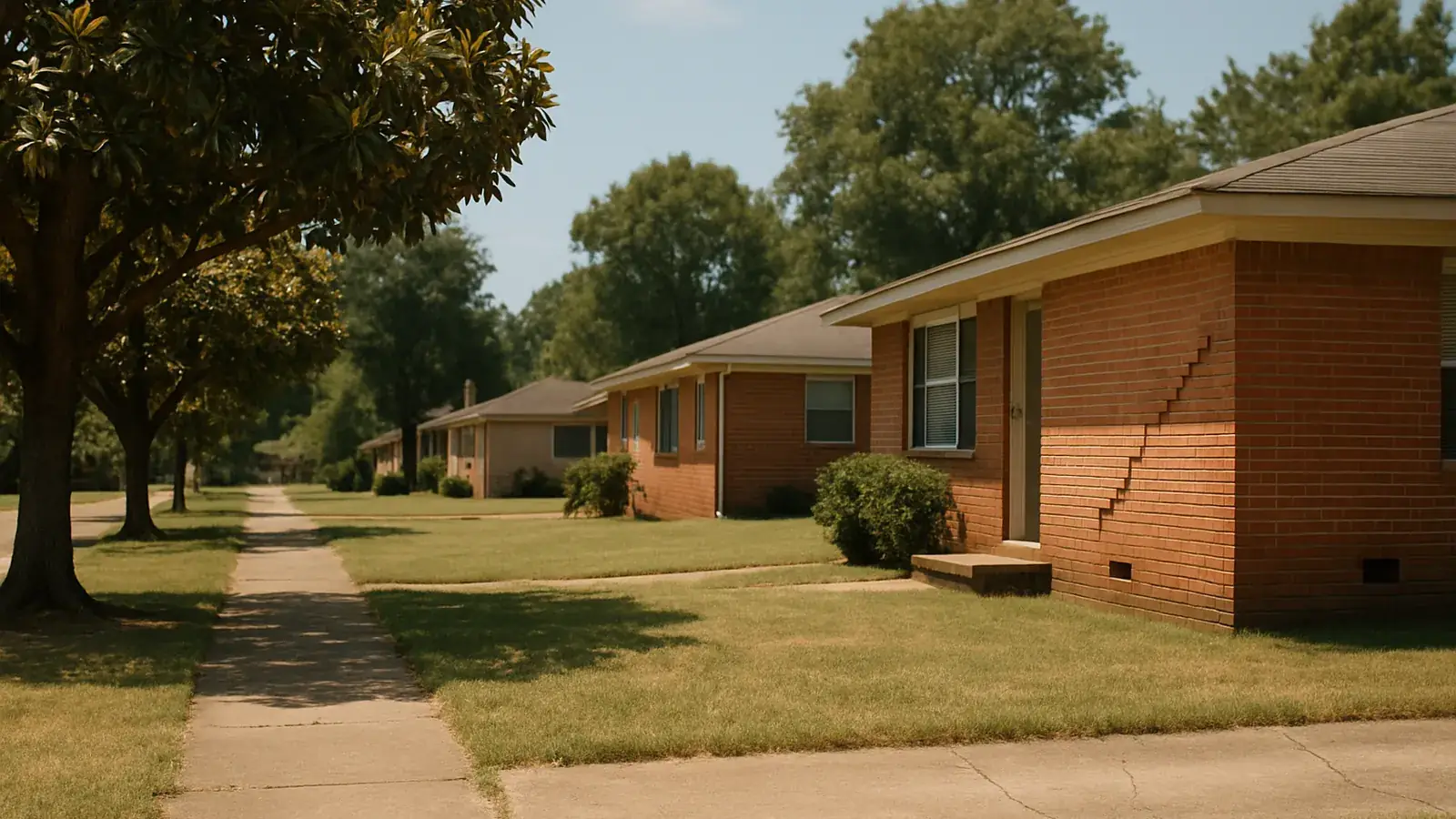
Foundation repair in Jackson runs $4,000–$15,000 for most full repairs, with piers at $1,200–$3,000 each and drainage corrections at $1,500–$6,000. Yazoo clay swelling over 200% is the cause. The elevation survey sets the scope; many local specialists don't charge for it, so ask when they call.
What this soil actually does, how the repair is decided, and when the honest answer costs a few hundred dollars.
What is under a Jackson house
Central Mississippi sits on the Yazoo Formation of the Jackson Group: a mineral-rich elastic clay running in a belt roughly forty miles wide and a hundred and twenty miles long. It is documented to swell more than 200 percent as it takes on water and to exert pressures exceeding 25,000 pounds per square foot against anything in its way. That is more force per square foot than most residential foundations are designed to carry downward: applied upward and sideways, by dirt.
It is not a fringe problem here. Reporting indicates up to 65% of homes in the metro area have sustained some degree of Yazoo clay movement damage, and the same formation is implicated in local sinkholes. When a Jackson homeowner says the house is moving, the honest response is to measure, not to reassure.
Settlement one place, heave another
The part that confuses people: this soil moves houses in both directions. Where the clay dries and contracts, a section drops. Where it takes on water and swells, a section lifts, and a slab has nothing like the mass required to resist it. So a single house can read low at one corner and high through the middle, with cracks that look like settlement and behavior that is anything but.
Those two conditions need different work in a different order. Settlement gets support. Heave gets its water source removed first, because piering around clay that is actively pushing upward fights the soil instead of bypassing it. Cracks cannot tell you which you have; an elevation survey can, and many local specialists don't charge for the first one.
What the fix usually is
| What the house is doing | What it usually means | The work | Typical range |
|---|---|---|---|
| Cracks that widened after a wet stretch | Clay taking on water and swelling | Drainage and moisture evening | $1,500–$6,000 |
| Stair-step cracks, sloping floors | Measured differential movement | Survey, then targeted piering | $4,000–$15,000 |
| Floor high in the middle, tile tenting | Heave: clay pushing under the slab | Moisture control, then support | $3,500–$12,000 |
| Horizontal crack in a wall | Lateral pressure: the Yazoo signature | Structural assessment, promptly | $400–$1,500 |
| Driveway or patio out of line | Flatwork followed the clay, up or down | Polyurethane lifting | $500–$2,500 |
| Warm floor spot, high water bill | Slab leak feeding the clay directly | Plumbing test before structure | $3,500–$12,000 |
Every number above, and what moves it, is broken out in the Jackson cost guide, including the jobs where the honest answer is a few hundred dollars of gutter work.
Depth is the local make-or-break
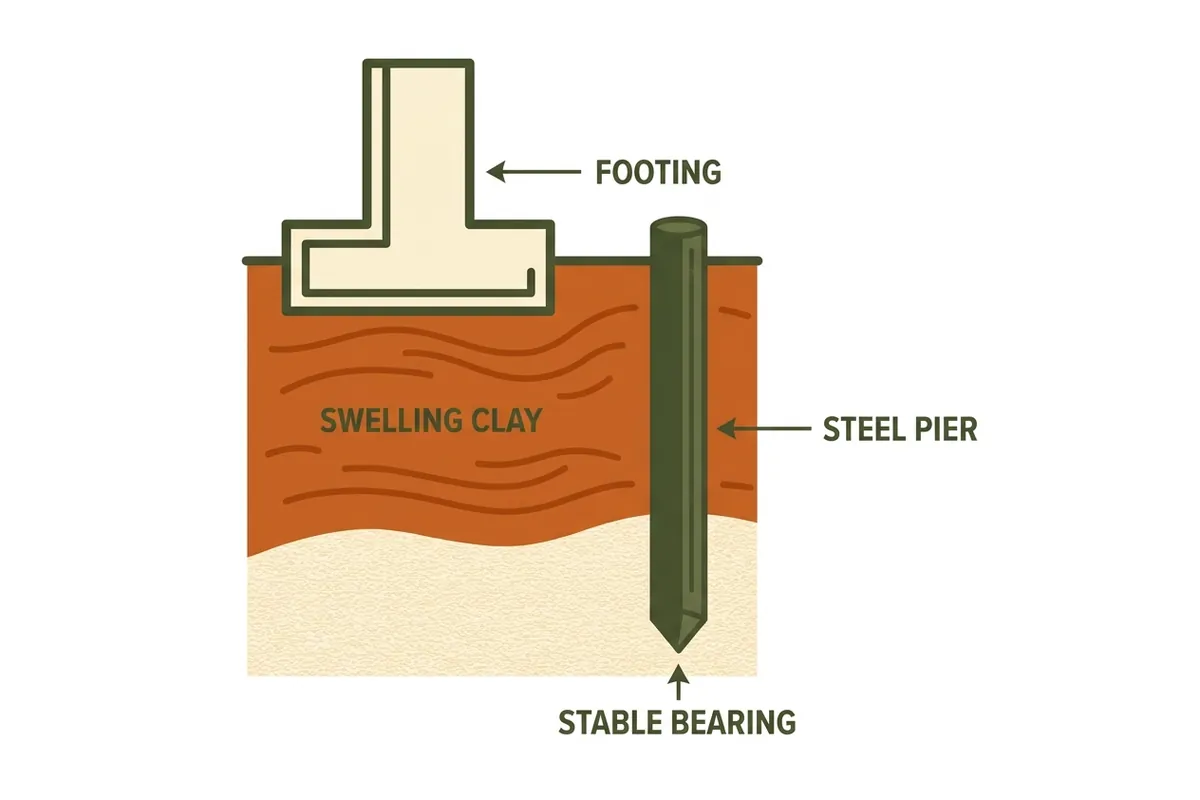
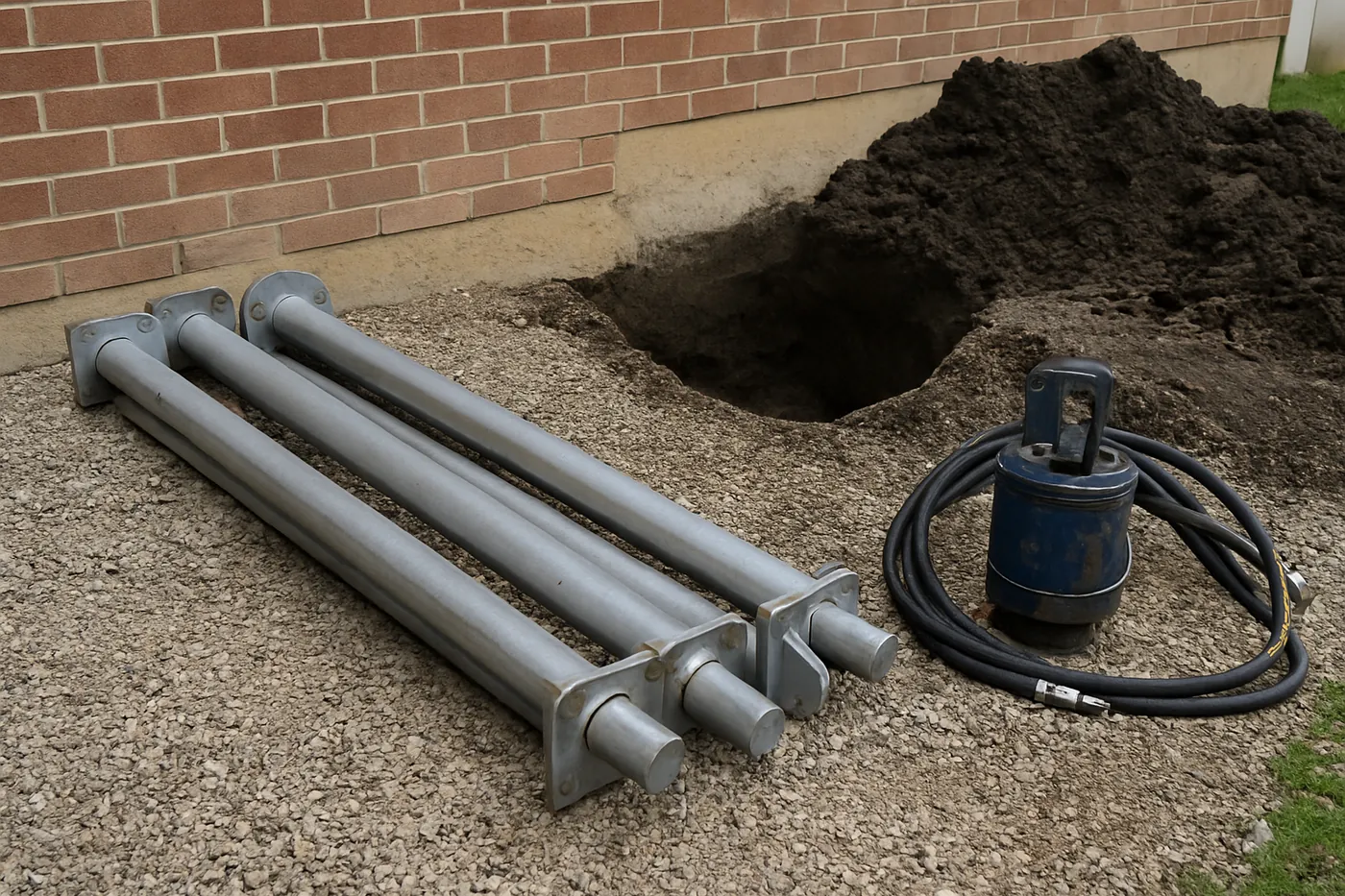
In most expansive-clay markets, the interesting question is how many piers. Here there is a second one that matters just as much: how deep. The Yazoo Formation is a thick deposit, so a pier that terminates inside it is still bearing on material that swells and pushes against the structure the pier was installed to protect. Two bids can name the same pier count and differ by thousands purely on the depth each commits to reaching, and the cheaper one is not a bargain if it stops short. Ask what refusal criterion or tested capacity the crew works to, and ask to see the per-pier log afterward.
Why a good evaluation starts outside
Because on this soil, water is the switch. Yazoo clay sitting at an even moisture content is comparatively quiet; it generates its enormous force by taking water on. So a downspout flooding one corner, a patio trapping runoff, an irrigation zone running along one wall, or a slab leak underneath are not side issues. They are the mechanism. A good evaluation walks the water path before it walks the house, and on a meaningful share of Jackson evaluations the honest scope turns out to be drainage rather than steel.
What we won’t recommend
- Piers before a survey. A pier count with no elevation numbers behind it is a price, not a design.
- Piers with no stated depth standard. On this formation that is the variable that decides whether the repair holds.
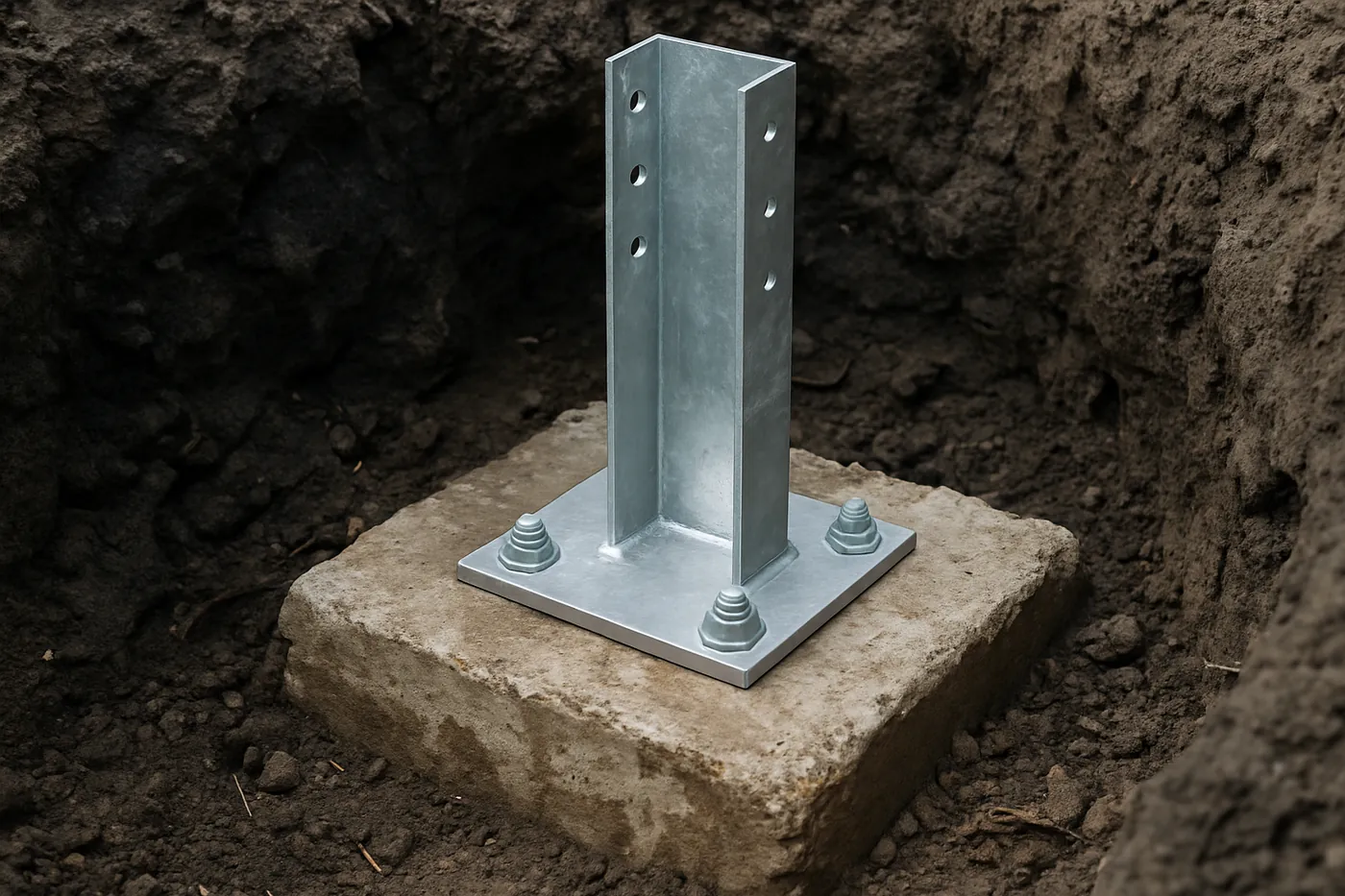
- Foam injection as house underpinning. Polyurethane is for flatwork; structural loads need engineered piers.
- Sealing an active crack. It produces a neat line that reopens after the next wet stretch.
- Piering a slab with an untested plumbing leak. The leak keeps feeding clay under everything nobody piered.
Three questions get their own deep pages: how the survey separates settlement from heave, how helical and push piers each prove they reached below the active clay, and what insurance covers when a slab leak, not the clay, moved your house.
Foundation questions Jackson homeowners ask
How much does foundation repair cost in Jackson?
Most full repairs run $4,000 to $15,000, with piers at $1,200 to $3,000 each. Slab work runs $3,500 to $12,000, drainage correction $1,500 to $6,000, and crack repair $400 to $1,500. The elevation survey decides which one you need; many local specialists don't charge for it, so ask when they call.
Why do Jackson foundations move so much?
Yazoo clay. The Yazoo Formation of the Jackson Group runs in a belt about 40 miles wide and 120 miles long through central Mississippi, swells more than 200% as it takes on water, and exerts pressures exceeding 25,000 pounds per square foot. Reporting indicates up to 65% of metro homes show some movement damage.
Do I actually need piers?
Frequently not, and a good specialist will tell you when. A meaningful share of houses here need water managed rather than structure installed - gutters, extended downspouts, ten feet of restored grade. The elevation survey separates real differential movement from cracks that stopped moving years ago.
What does the evaluation include?
An elevation survey across the slab reported in inches, measured and dated cracks, and a walk of the exterior water path. If work is needed, ask for a written scope with a price on each line. About an hour, and it is yours to take to other bidders.
Will insurance cover it?
Rarely for soil movement, because Mississippi policies exclude earth movement and Yazoo clay swelling is exactly that. Often for damage caused by a sudden plumbing discharge under the slab, which is a common cause here and worth a static plumbing test before you spend anything.
Is my house settling or heaving?
Both happen here, and the elevation survey is what tells them apart. Settlement reads as a low zone; heave reads as a high one, often toward the middle of a slab, because Yazoo clay pushes upward with more force than the house weighs. The repairs are not the same, so the diagnosis has to come first.
Get a Jackson foundation evaluation
Tell us what the house is doing (stair-step cracks, doors that stick every August, sloping floors, separating trim) so the evaluation starts from what you have seen. A local specialist who works in Jackson will call you back.